 Anasayfa
 Canlı Borsa
 Borsa
Borsa Döviz Kurları
 Altın
Altın Hisse Senetleri
 Endeksler
 Kripto Paralar
 Döviz Hesaplama
 Döviz Çevirici
 Kredi Arama
 kriptohavadis
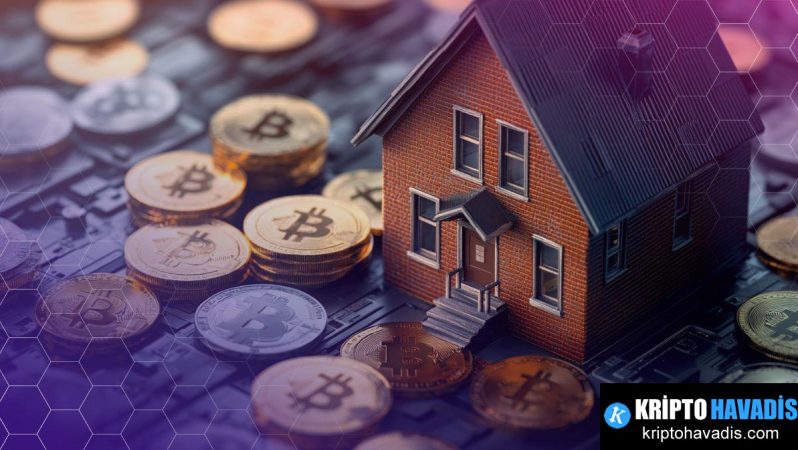
Due to rising housing costs, young Americans are now turning to crypto rather than saving to achieve their dreams. This behavioral shift is driven by financial despair and short-term hopes; for some, it becomes a pursuit of high-risk and rapid gains.
Important Points:
- As homeownership becomes increasingly unattainable, young people are turning to cryptocurrencies in search of financial security.
- Studies suggest that with the shattered dream of homeownership, “fearless tenants” are shifting towards risky investments instead of savings.
- Over time, this tendency pushes many into a cycle that struggles with unequal wealth; those who own homes continue to build their assets.
The report argues that the exorbitant rise in housing prices has fundamentally changed how a generation thinks about money and risk.
US’de Ev Sahibi Olma Umudunun Zayıflaması ve Gençleri Riskli Bahisler İçine Çekmesi
Research shows that since the 1980s, the average US home price-to-income ratio has increased at an unprecedented rate; today, young adults may have to work nearly two additional years to earn the same income their parents used to afford the same house. As the likelihood of homeownership declines, financial behaviors are changing just as dramatically. Among young people shifting focus from saving to volatile assets promising quick gains, some say “cryptology replaces the American Dream”; digital assets are viewed as high-risk, high-return betting tools when traditional goals seem out of reach.
Crypto participation is seen more as a strategy to cope with a departure from trust in banks or decentralization than a reflection of distrust. The research points to a period called “fearless tenants,” where when buying a home no longer appears realistic, people’s financial habits change fundamentally. In a clear comparison, tenants with similar net worth spend about 10% more on credit cards than homeowners and tend to break away from long-term career goals. The events until the 2007-08 global housing bubble burst support this view.
Subsequently, as the US economy became a story of financialization, the housing bubbles inflated again; today, even larger bubbles are looming. As a sign, young people in Korea and Japan are also experiencing similar housing inflation, showing a rapidly growing movement in investment fervor and crypto communities. This pattern is concluded to be global: if housing cannot be obtained, savings give way to speculation.
In March, the US Department of Housing and Urban Development (HUD) announced that it is exploring the use of blockchain and stablecoins to improve operational processes. Additionally, a HUD grant recipient is discussing a pilot program where payments could be made with stable crypto; this initiative will first be tested in a single department before being rolled out more broadly.